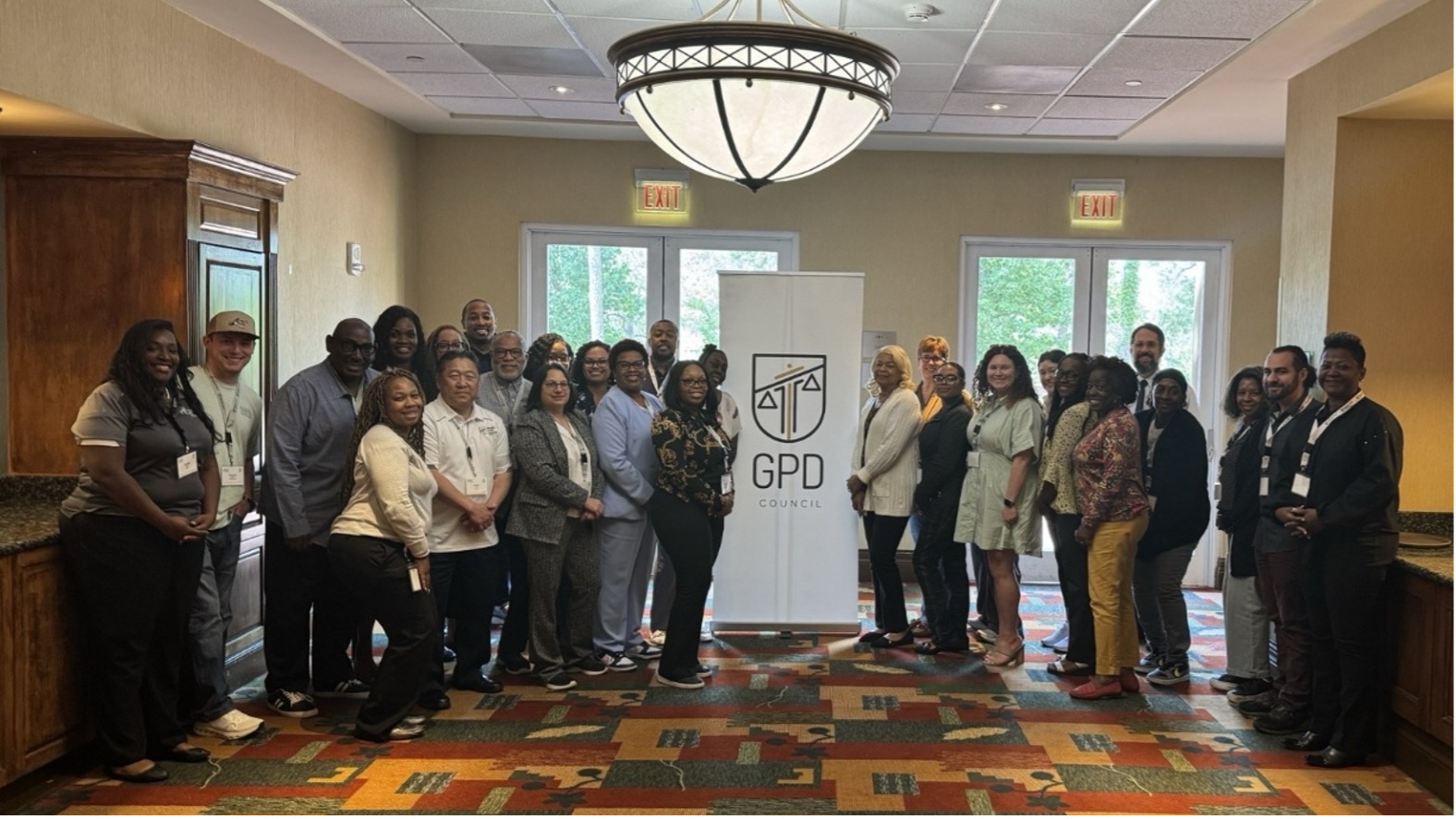
Public defenders, social workers, and investigators gathered May 4–5 in Stone Mountain for training focused on representing youth in crisis. GPDC officials also detailed the statewide rollout of the Ladders Program, a 12-month initiative supporting justice-impacted young people ages 16 to 24. Youth Advocacy Division defenders from across Georgia gathered for training focused on strengthening legal representation for young people while reinforcing the agency’s broader investment in outcomes beyond the courtroom.
Titled “Mayday! Answering the Call for Youth Justice,” the May 4–5 training drew Georgia Public Defender Council attorneys, social workers, and investigators who represent youth from across Georgia.
Led by Gayle B. Murray, director of GPDC’s Youth Advocacy Division, the training framed youth defense as both legal advocacy and life-changing intervention.
“The work we do is not easy,” Murray told attendees. “These waters are often rough, the visibility low, and the systems unpredictable. But defenders continue to show up as the people who read the waves, steer toward safety, and throw lifelines when young people need them most.”
The program covered issues including competency to stand trial, gang-related allegations, serious offenses, immunity hearings, transfers out of adult court, youth involved in multiple systems, and creating stronger support systems for families.
Throughout the conference, Murray used a maritime “Mayday” theme to emphasize the role youth defenders play in helping young people navigate crisis and instability.
“When a youth is swept into adult waters, the defender’s job is to steer them back to the harbor built for children,” Murray said during a session on reverse transfer hearings. “Across this state, defenders are part of a fleet committed to keeping kids off the rocks and guiding them toward calmer waters.”
Omotayo B. Alli, executive director of GPDC, said the training reflects the agency’s commitment to investing in both defenders and the young people they serve.
“Public defense doesn’t stop at the courtroom door,” Alli said. “If we are serious about youth justice, we must invest in the people doing the work and in the young people whose futures are on the line. This training reflects that commitment.”
The event supports GPDC’s strategy to strengthen youth defense statewide through specialized training, interdisciplinary collaboration, and expanded support services.
Alongside the legal training, GPDC officials explained the expansion of the Ladders Program, a 12-month initiative available to justice-impacted youth and young adults ages 16 to 24 newly available across Georgia.
The online program provides participants with educational pathways, including GED completion and vocational training, as well as case management, mentorship, and access to critical support services such as transportation and mental health resources.
“This program is about meeting young people where they are and walking with them toward where they want to go,” said Kenya Holmes, social services program manager for the Ladders Program. “We set clear expectations, but we also provide real support — education, guidance, and accountability — so participants have a genuine opportunity to succeed.”
GPDC officials said Ladders helps youth overcome barriers that contribute to their judicial system involvement, including gaps in education, employment readiness, unstable housing, trauma, and limited access to support networks.
Participants work with social work specialists to develop individualized plans, attend workshops focused on life skills and career readiness, and receive assistance navigating educational and workforce opportunities.
The Georgia Public Defender Council established its Youth Advocacy Division in recognition that young people in the justice system often face challenges extending far beyond a courtroom. Many experience trauma, interrupted education, housing instability, mental health needs, or simultaneous involvement with multiple government systems.
Murray said effective youth defense requires that defenders see the whole child, not simply the charges they face.
“Competency, gang allegations, transfers, crossover cases — every one of these issues affects a child’s future trajectory,” Murray said. “Our responsibility is not only to advocate in court, but to recognize when the compass is off, recalibrate, and help young people find a path forward.”
Alli said GPDC’s investment is both practical and long-term: improving legal outcomes for young people and helping them reduce future incarceration, court involvement, and ongoing social costs.
“We’re not just responding to cases — we’re investing in outcomes,” Alli said. “That means making sure defenders are equipped to advocate effectively and that young people have pathways to move forward.”